
The Most Expensive Part of an Uncontested Divorce Isn't the Paperwork
A flat-fee quote for an uncontested divorce looks like the whole bill. It usually isn't. The paperwork is the cheap part. The expensive part is getting two people to agree on everything before that paperwork can be filed.
What an uncontested divorce costs on paper
On paper, an uncontested divorce is affordable. Florida is a useful example. The court filing fee is about $408, plus a small summons fee. A flat fee for an attorney to prepare the paperwork typically runs $1,200 to $3,500.
Those numbers are real. But they rest on one assumption that is easy to miss: that the two of you have already agreed on everything. The house or the lease. The retirement accounts. The savings and debts. What each of you needs to live on. Who pays what, and for how long.
A flat fee covers turning those agreements into legal documents. It doesn't cover reaching them.
Where the money really goes
The biggest bill in most divorces, even uncontested ones, is the process of getting on the same page. It's the calls, the emails, and the drafts that go back and forth until two people agree on every piece.
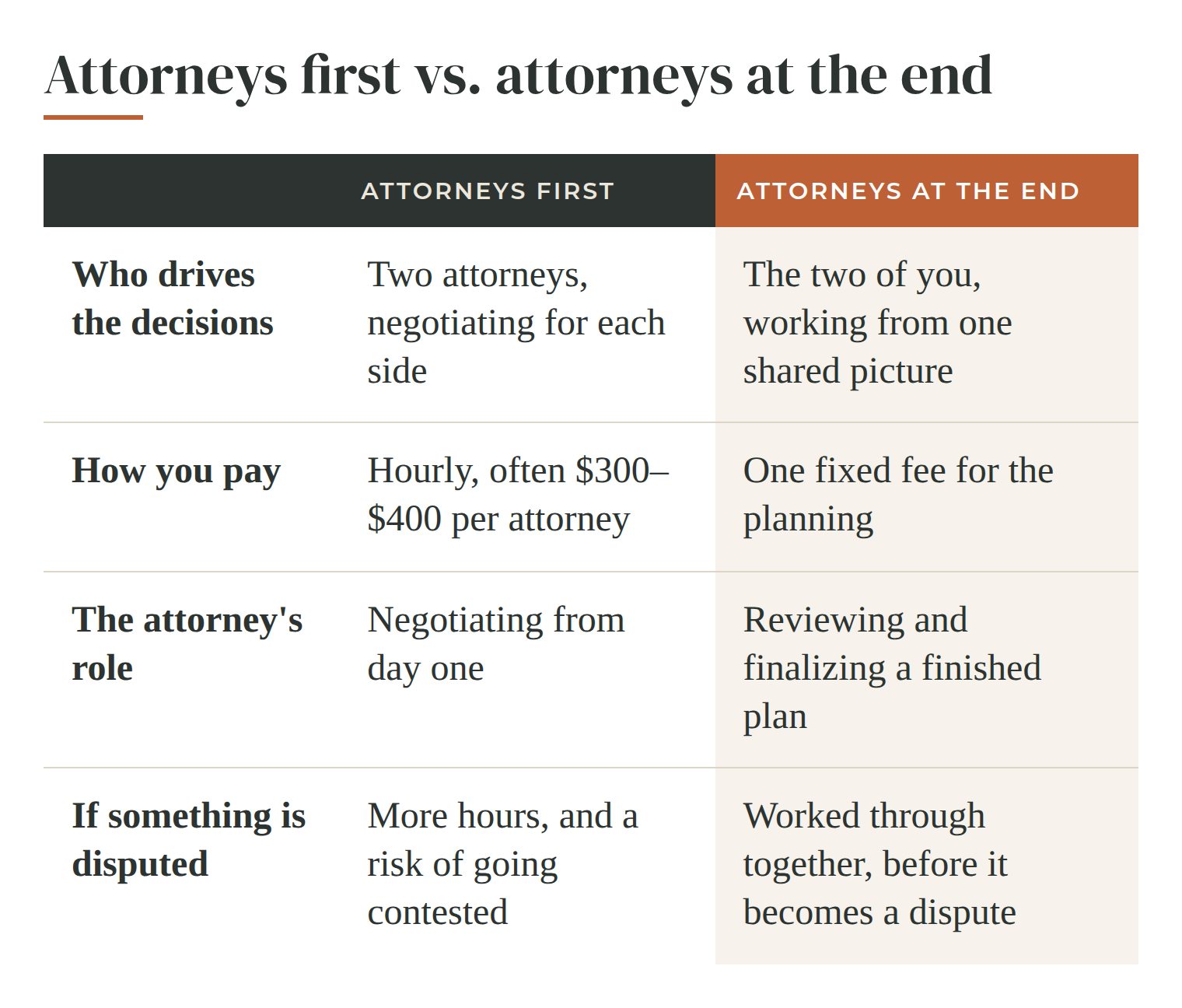
When attorneys lead that process, it's billed by the hour. Most family law attorneys charge $300 to $400 an hour, and each spouse usually has their own. A question that takes a week of emails to settle can cost more than the entire flat fee.
If agreement stalls, an uncontested divorce becomes a contested one. Moderately contested cases commonly reach $7,500 to $25,000 or more per spouse. Most people don't plan to end up there. They get there one disagreement at a time.
Why "uncontested" often isn't simple
An uncontested divorce is the right finish line. The trouble is how many couples try to get there.
• It assumes the hard part is done. An uncontested filing works once every decision is made. It doesn't help you make them.
• One attorney can represent only one of you. In a quick uncontested divorce, one spouse often signs without real support or a clear view of the numbers.
• Paperwork doesn't test the numbers. The forms record a decision. They don't show whether it works, whether two households can run on the income available, or what a retirement split means in ten years.
• Details get missed. Dividing a retirement account takes specific instructions to the plan. When nobody spells those out, they become a problem, and a bill, later.
• Income gets overlooked. Couples focus on the assets and skip the harder question: what each person needs to live on after the divorce.
A different order: decisions first, attorneys at the end
The traditional process brings attorneys in first and works out the plan later, by the hour. Divorce Architecture flips that order.
At Rainier & Hawthorne, we work with both spouses together to build the plan first. We bring every asset, account, and source of income into one shared picture. We model the realistic options side by side, so each decision is made with real numbers instead of guesses. Then we work through the decisions as one connected plan, not a series of separate negotiations.
The work is done for one fixed fee, agreed upfront. When the plan is complete, one independent attorney reviews it and handles legal finalization. You pay for finalization, not for months of back-and-forth.
Questions to ask before you sign a flat-fee quote
A flat fee can be a good deal. Before you rely on one, ask:
1. Does this fee assume we've already agreed on everything?
2. What happens, and what does it cost, if we disagree on something along the way?
3. Which one of us do you represent, and what support does the other spouse have?
4. Does the fee include the orders needed to divide our retirement accounts?
5. Who helps us work out what each household needs to live on?
If the answers point back to hourly billing, the flat fee is only part of the cost.
The bottom line
Keeping costs reasonable is the right goal. The way to do it isn't to find the cheapest paperwork. It's to keep the expensive part, getting on the same page, out of hourly billing.
Build the divorce you want first. Then let an attorney finalize it.
If you're considering divorce and want to understand your options, book a free 15-minute call. No obligation, and no preparation needed.
